How AI is changing education and the online course market
The course that only delivers information is over — information became free and on demand. What is left of value is what AI does not do: corrected practice, community and credibility.
The product that is over
For twenty years the online course market sold basically one thing: organised information. Someone who knew recorded lessons in order, and you bought access.
That product died. Not because courses got worse, but because organised information, on demand, at your own pace and adapted to your specific doubt, now costs a monthly subscription — or nothing.
A student with a good model has something no recorded course offers: a tutor that answers exactly the question they have, at the moment they have it, as many times as needed, without judgment. For anyone embarrassed to ask, that is not an incremental improvement. It is the difference between learning and giving up.
What became valuable
If information turned into a commodity, the value moved to four things AI does not deliver on its own:
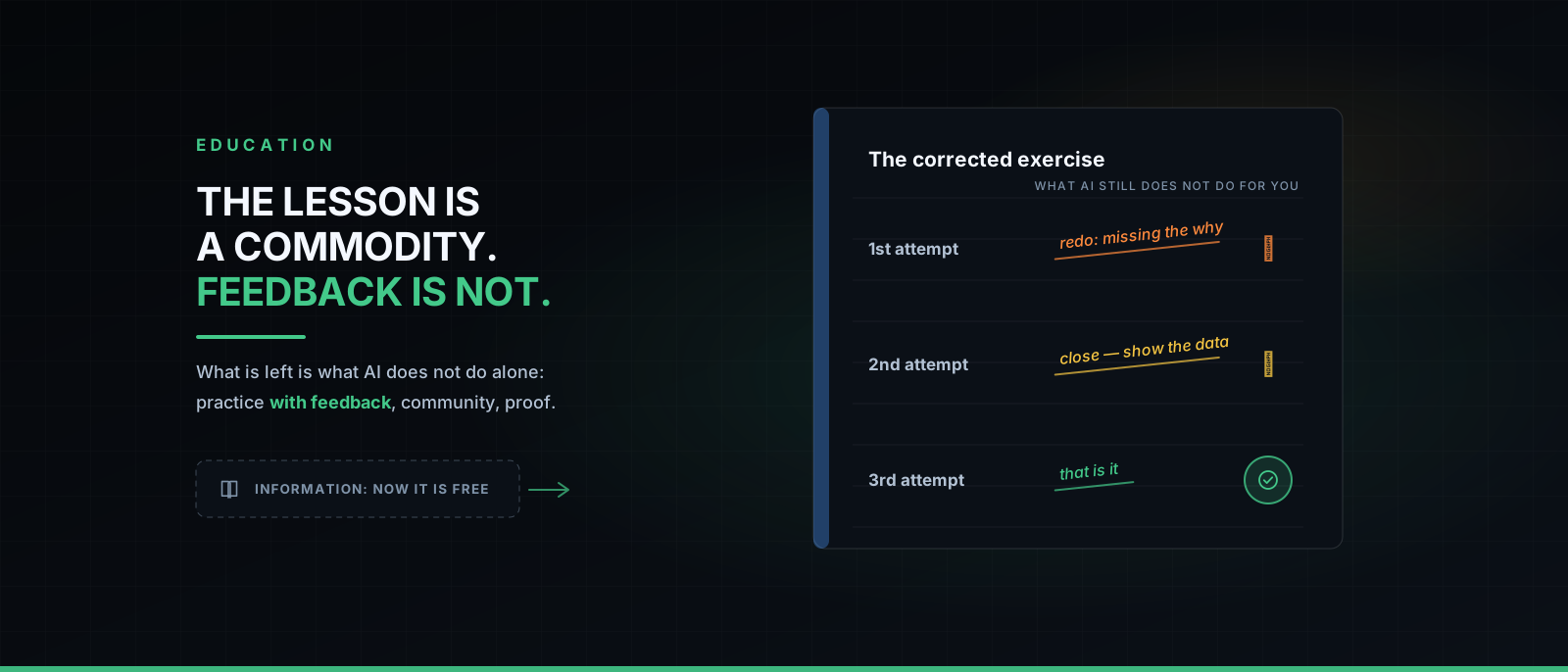
Corrected practice with consequences. Doing, getting it wrong, receiving specific correction from someone who has done it before. The model corrects the exercise; it does not know that you always get the same thing wrong because of a habit of reasoning that only someone who has followed you for two months can spot.
Sequence and commitment. The difficulty of learning alone is almost never a lack of material — it is a lack of order, of deadline and of someone expecting you to show up. A good course today sells discipline, not content.
Community. People at the same point on the road, people slightly ahead. A professional network is the by-product that survived intact.
Credibility. Whoever signs off that you know. As long as the market does not trust automatic certificates, the name of whoever teaches keeps its worth.
The problem nobody solved: assessment
Here is the real crisis in formal education, and it is more serious than the debate about cheating.
Written work done at home stopped measuring anything. Essays, reviews, reports, exercise lists: all of it can be produced in seconds, at a quality above the class average. Detectors for generated text do not work reliably — they err in both directions and accuse the innocent, which is worse than not detecting at all.
The ways out being tried, with different results:
- In-person and oral assessment. Back to the oldest form: defending what you handed in, live. It works, and it costs dearly in teacher time.
- Assessing the process. Drafts, versions, the record of the path. Good in theory, easy to fake.
- Assume AI and raise the bar. Everyone uses it, and what gets assessed is what the person did beyond what the tool delivers on its own. It is the most honest way out and the one that demands the most preparation from whoever teaches.
A school that pretends the problem does not exist will spend a few years handing out diplomas that do not match competence — and the market finds that out fast.
What changes for whoever teaches
Recorded content became bait, not product. It attracts; it does not hold a price.
Small groups are worth more. If the value is in the follow-up, mass scale works against you. The movement is towards fewer students, a higher price and a verifiable result.
A deep niche beats a broad subject. "Introduction to Python" lost to the model. "How your dental clinic bills insurers without losing claims" still holds, because the knowledge is specific, tacit and poorly represented in anyone training material.
Producing material got cheap — and that goes for your competitor too. The advantage moved to what you know that others do not, and to the trust your audience has in you.
The question for any course today is direct: if a dedicated student could get this by talking to a model for two weeks, what exactly are they buying from you?
What changes for whoever studies
Learning got easier, and so did fooling yourself. Reading the explanation and feeling you understood is a new trap, because the explanation arrives tailored, clear and pleasant. Understanding is proved by doing it without looking.
Friction is where learning lives. Asking for the finished answer to the very thing you are trying to master is paying not to learn. Use it as a teacher — explanation, correction, counter-argument — and not as a supplier.
Certificates are worth less; a portfolio is worth more. Things built, working, that you can explain in detail in a conversation. That is the currency.
Study what accumulates. Fundamentals, a specific domain, judgment. Tools change every six months; foundations do not.
The balance
AI will not end education — it will expose whoever was selling nothing but access to information. A good teacher becomes more valuable, because they now compete with an infinite tutor and what they offer on top is exactly what does not get automated: attention, correction with context, and responsibility for the outcome of another human being.
Get the next articles
No spam. One message when a new article is out, with an unsubscribe link in every one.