How to create a virtual employee using AI agents
Do not start with the technology. Start by writing the job description — including what it may not do without asking permission.
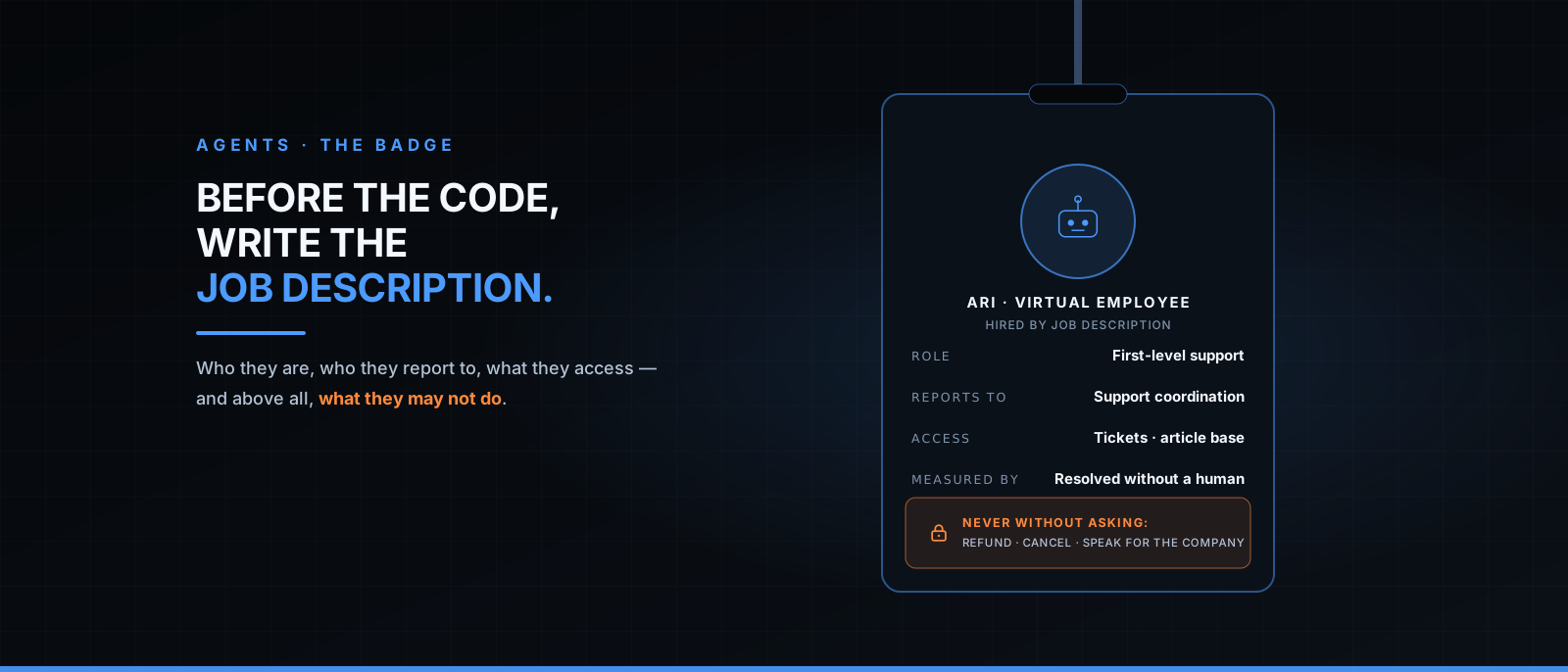
Start by hiring, not by programming
The mistake that kills most "virtual employee" projects is starting with the tool. Someone picks the platform, connects the model, and only then discovers that nobody defined what the thing was supposed to do.
Invert it. Treat it like a real hire and write the job description before writing a line of configuration. A one-page document, with six sections.
1. The role
One sentence, with no generality. "The company's AI assistant" is not a role. "Answers first-level questions about orders, deadlines and tracking on WhatsApp, from 6pm to 8am" is a role.
The narrower it is, the greater the chance it works. A good agent is a specialist; a generic agent is a demo.
2. The inputs
Where does the work arrive from? WhatsApp, email, a form, a queue, an event in a system. Define the format and the expected volume per day — that determines cost and architecture.
3. The tools
What it may consult and what it may execute. Be explicit and minimalist:
get_order(number)— read, no risk.get_delivery_estimate(postcode, sku)— read.open_ticket(customer, subject, text)— reversible write.reissue_invoice(order)— write with financial effect. Requires confirmation.
The golden rule: each tool does one thing, with a name that explains it, validated input, and errors in plain readable language. The agent reads the error message to correct itself — so the error message is part of the design, not log leftovers.
4. The knowledge
What it needs to know that is not in any system: the returns policy, the tone of the brand, what never to promise, the ten cases that always come up.
That lives in documents the agent searches when it needs to — not pasted inside the prompt. A document in a search index can be updated by anyone in operations; a giant prompt can only be touched by whoever wrote it.
5. The limits — the most important section
Three lists, written with names and surnames:
Does it alone: look things up, inform, log, answer within policy, forward.
Does it and tells you: open a ticket, schedule a callback, apply a discount up to a pre-approved ceiling.
Never does alone: cancel an order, promise a deadline outside the table, discuss legal matters, change customer records, handle a complaint that mentions a consumer protection agency, deal with an angry customer — that one goes straight to a person, with no attempt to work around it.
The quality of a virtual employee is measured by how clearly it gives up. An agent that insists where it should not is the one that generates the loss.
6. The evaluation
How will you know it is doing well? Pick three numbers before switching it on:
- Percentage resolved without a human.
- Percentage escalated correctly (escalating is a success, not a failure).
- Serious errors per week — a wrong answer with a real effect.
And build a set of thirty to fifty real cases with the right answer, taken from your support history. Run that set on every change of prompt, model or tool. That file is the most valuable asset of the project; the agent's configuration is disposable, it is not.
The probation period
Nobody puts a new hire alone on the first day. It is the same with an agent, in three phases:
Phase 1 — shadow (1 to 2 weeks). It drafts the answer, a human reads it, corrects it and sends it. You measure the correction rate and collect the errors. No risk, maximum learning.
Phase 2 — short leash (2 to 4 weeks). It answers on its own the cases it got consistently right in phase 1 and forwards the rest. Someone reviews the day's sample every morning.
Phase 3 — defined autonomy. It operates inside the "does it alone" list, with weekly sample review and an automatic alert when an indicator drops.
Whoever skips phase 1 discovers the errors in front of the customer.
What nobody tells you
It needs a manager. Someone from operations — not from IT — who owns the result, watches the indicators, fixes the knowledge and decides when to loosen the leash. An agent with no owner degrades in silence.
The work does not end at delivery. Policy changes, the product changes, the customer invents a new question. Set aside a few hours a month for maintenance, every month, forever.
It must introduce itself as an AI. Beyond being an increasing regulatory requirement, it is what protects your reputation when it gets something wrong. A customer forgives a bot that errs and transfers; they do not forgive discovering they were deceived.
The real gain comes from the dead shift. It is not about replacing the daytime team. It is about answering at 11pm on a Saturday, when there was nobody — coverage that did not exist before at any price.
Get the next articles
No spam. One message when a new article is out, with an unsubscribe link in every one.